Just us, the cameras, and those wonderful people out there in the dark...
Showing posts with label Alfred Hitchcock. Show all posts

Tuesday, September 30, 2014

Review: Lifeboat (1944)

* * *

Director: Alfred Hitchcock
Starring: Tallulah Bankhead, John Hodiak, Hume Cronyn, Mary Anderson, William Bendix, Canada Lee, Henry Hull, Walter Slezak

Alfred Hitchcock is one of cinema's most revered directors and his greatest works are still discussed, debated and dissected by film fans and scholars. But, while films like North by Northwest, Rear Window, Vertigo, Psycho and Notorious will always come up when considering Hitchcock's craftsmanship and skill as a filmmaker, films like his 1944 feature Lifeboat seldom seem to get a mention. While Lifeboat isn't "top tier" Hitchcock, it is a film which demonstrates how the director's mastery of form could make an engaging film out of a premise which, on paper, would sound uncinematic. Lifeboat is a film which takes place entirely in its eponymous locale, the characters trapped together in the North Atlantic, at the mercy of the elements and their increasing internal conflict. Though it never quite attains the level of tension of Hitchcock's great thrillers, it is a solidly entertaining film - and, as a plus, it contains what is arguably the director's cleverest cameo.

Tuesday, January 14, 2014

Partners in Crime: Hitchcock & Grant

Celebrating cinema's greatest collaborations


When you think of Alfred Hitchcock in relation to his actors, you're most likely to think of the series of actresses he worked with, women of a certain type who became collectively known as "Hitchcock Blonde." But among his many collaborations, one of the most fruitful was his work with Cary Grant, whom he once described as "the only actor I ever loved in my whole life." Although Grant was already a star by the time he began working with Hitchcock, their work together would bring darker edges to Grant's charming persona, sinister and dangerous qualities which demonstrate that Grant was one of the most versatile actors of his time, though he's rarely given credit for it. Grant and Hitchcock worked together on four occasions, all four of them bona fide classics.

Wednesday, February 23, 2011

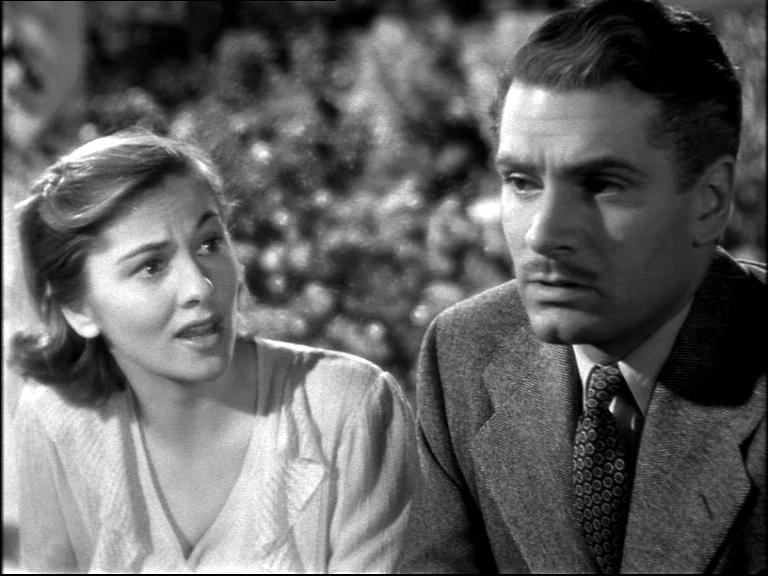
The Best Picture Countdown #13: Rebecca (1940)

This post was contributed by Thaddeus of the blog Net-flixation who, as you will see from this piece, writes very thorough and well thought out reviews.

Director: Alfred Hitchcock
Starring: Joan Fontaine, Laurence Olivier


"Rebecca" begins with images of a lush wilderness - mist blowing across the ground, sunlight broken by branches and leaves. The shafts of light pierce across the screen, and there's a lovely contrast - the thick tree trunks are so dark that they seem more shadow than anything else. The credits finally close with the words, "Directed by Alfred Hitchcock." Ah.


Then we hear a woman's voice. It's high-pitched, but rather stately.

"Last night, I dreamt I went to Manderley again..." 

She intones these words - like a spell, like chant. She continues, describing exactly what the camera shows: rolling through metal bars, the screen tracks an over-grown forest road up to a massive mansion. The castle-like structure, of a size with St. Patrick's Cathedral, is ominously imposing by moonlight. She goes on...

"I looked upon a desolate shell, with no whisper of a past about its staring walls. We can never go back to Manderley again... But sometimes - in my dreams - I do go back; to the strange days of my life, which began for me in the South of France."

Jane Austen, anyone? The screen fades out completely, to open with waves on a cliff. A man stands at the very edge, staring darkly at the drop ahead. He takes a half-step forward - and our narrator's voice gives a shout. Because they're both English, he pretends she simply annoyed him, then tells her to leave. She's embarrassed, and half-explains before letting him insist on his lie.


Old trailers sure could be cheesy; this one gives away far too much, tho...


All of which leads to an awkward high society meeting in a Monte Carlo parlor. Edith Van Harper, a middle-aged socialite, is complaining about everything as she notices and remembers Maxim de Winter (Laurence Olivier), a famous uber-gentleman. Edith's young assistant (Joan Fontaine) is wide-eyed in shock - the man she stopped at the cliff was Maxim! Since the younger woman's part is never named, I'll just call her "Selene."

The two social peers banter for a spell, until Maxim makes an abrupt exit. Too abrupt, really; he "nearly" became rude. Of course, the older woman blames it on her aide - before mentioning Maxim's long grief over his wife's death...


Yet fate conspires to pair de Winter with Selene. A chance meal quickly leads to an outing by the shore. The girl is open, happy, and shy (but a bit cheeky). The rosy glow on Selene's lovely face only breaks when Maxim is suddenly formal, forceful, or distant. The specter of his wife, it seems, may pop up at any time...

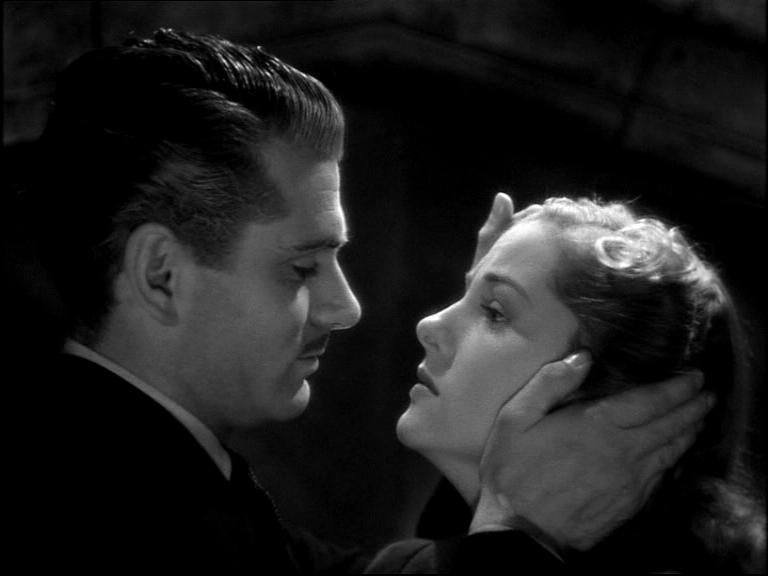
Edith's timely cold creates the perfect opportunity for romance to brew. Selene's eagerness for life brushes against his half-healed wounds, but the older man is clearly taken with her. As their courtship blossoms into a marriage proposal, the frequent jolts of negativity are what create Hitchcock's classic tension: What exactly happened to the first Ms. de Winter? Will the tragic past ruin a happy future?
 
This classic gothic story was Alfred's first American production. Released in 1940, "Rebecca" got 11 Oscars nods, and won for Best Picture and Best Cinematography (David O. Selnick and George Barnes received the statues). It is a fairly neat adaptation of Daphne du Maurier's popular novel; the book "Rebecca" is often compared to "Jane Eyre," so you can imagine it could have turned out a total mess.

The tone of the picture is somewhat odd - it constantly bounces between light and dark. People are happily chatting one moment, until someone dishes out some unkind thoughts. A moment of happy flirtation or connection is cut off when Selene reminds Maxim of his old loss, or when Selene's self-esteem gets trampled...

These sudden shifts are strongly reflected in the score. The music is almost always quite delicate, but it is so playful, so frequently! Then why do these ominous overtures keep re-appearing?

In part, it's because the soundtrack is quick to reflect the feelings and worries of the characters; almost a little too quick, for my taste... It makes sense, in the end - the story itself doesn't offer much dramatic tension until 1/4 of the way through; the music has to do the job of keeping certain undercurrents alive so they can play out effectively later...

The contrast between light and dark, of course, is exactly where the movie began. Those opening shots of mists and shadowed trees are a good indication of what's to come. And the regular reinforcement of the theme is part of what makes "Rebecca" such a solid picture: Negative and positive overtake each other, stumbling into each other as the characters try to live their lives.


Watch those opening credits and see what I mean.


Some viewers might be turned off by the constant injection of British Upper-Crust formality. Maxim, of course, has all the trappings of his background, both good and bad. Oh god, his home has a proper name! The constant threat of hearing "but a young lady of your station must never..." gets heavy-handed - it's thrust into part of most every scene. The actors help everything along, though.

Olivier is extremely steady in his Mr. Darcy-esque role. He shifts strongly from anguished to happy, from open to selfish and utterly contained. He nicely conveys a conflicted man, a widower for whom new love is (at least) a little dangerous. Joan Fontaine is perfect as the simple youngster thrown into a complicated situation; if you find any problems with her performance, just look at her eyes and face when she's suddenly embarrassed, or in love.


Shadows are a constant.

Of course, modern-minded viewers might be a little struck by other social attitudes at play. Maxim acts like a chauvinist jerk at times; he can do it in fun, as when he says (while shaving in the bathroom), "I'm asking you to marry me, you little fool." Other times, though, he seems casually patronizing or belittling - so his occasional temper comes off harsher for it. Selene is always sweet, kind, and humble throughout, and this naturally makes Mr. de Winter an easy role to root against. Just remember - it's Europe, 70 years ago...

"Rebecca" is a peculiar kind of movie; you have to go into it with the right expectations. It's called a "psychological/dramatic thriller," yet the suspense is very indistinct. This might be appropriate, for a story about people that are in some way haunted. But when you can only point to some tense conversation between people, the occasional harsh word... this isn't "Notorious," not by a mile.

Keep in mind, I've only described the first 40 minutes or so. As this flick proceeds, lovely images and haunting, dream-like music should pull you into the tale. The movie's true trick is in turning the memory (and repercussions) of one woman's life into a "feeling" that pervades the whole piece, and everyone in it. It's a slow mystery that seems like a differently-obsessed version of "Vertigo."


Dead plants are never a good sign.


What it boils down to is you can't go into this expecting "North by Northwest." This is even more true, because watching this "thriller feature" can feel more like listening to a radio play of "Wuthering Heights." So long as you know what you're getting, I think you'll find "Rebecca" to be a pleasant and interesting story. There's always something to enjoy about this movie - if any one scene doesn't quite engage you, you might notice the great cinematography or the score. Well done, Hitch!


You'll never doubt that the camerawork deserved an Oscar.


As a final word, I'll talk about this review itself. I joined The Large Association of Movie Blogs ("LAMB") in 2010. In December, The Flick Chick posted a nifty request on LAMB's site: she wanted to review each Best Picture winner, from 1929 to 2010, before the 2011 Oscars. She invited members to contribute their own reviews for some winners.

That's how I came to watch and review "Rebecca." I had never seen it before, and I might not have seen it for a long time if not for this simple and inventive idea. I'm always happy for the chance to watch a new movie by the Master of Suspense. This is my first time, though, helping out someone who shares my love of writing about film; also, my first time contribution to such a project. I'm thankful that 2010 offered one last opportunity to expand my horizons a little, and that 2011 followed through smoothly.

Tuesday, October 20, 2009

Review: The Lodger: A Story of the London Fog (1927)


* * *

Director: Alfred Hitchcock
Starring: Ivor Novello

A man who calls himself “The Avenger” has been going around killing blond women. The landlady and her husband wonder… could their mysterious new tenant, who seems to have an unhealthy preoccupation with their golden haired daughter, be the killer? In a film directed by Alfred Hitchcock, the answer is of course not simple and The Lodger keeps you guessing and second-guessing for most of its duration.

The film opens with the words, “To-Night Golden Curls,” blinking on and off the screen, the full meaning of which is explained at the end of the film as a kind of framing device. The film then moves on to a killing and a fresh wave of panic sweeping through the residents of London. The Avenger strikes again! This time, however, there was a witness, who describes the man as having his face half covered by a scarf. Cut to the home of The Landlady (Marie Ault) and Her Husband (Arthur Chesney), who have just welcomed a new tenant into their home, one who arrived at their door with a scarf covering half his face. If the scarf was all the evidence against him, there wouldn’t be much suspense with regards to the intentions of The Lodger (Ivor Novello, who would reprise the role in the 1932 remake), but his subsequent behavior certainly makes you wonder (as do his marvelously crazy eyes). He’s captivated by his landlords’ daughter, Daisy (June), who has the golden curls so coveted by the killer and he’s intensely private, particularly about the mysterious bag he keeps locked up in a cupboard. And then there are those nights when he sneaks out of the house…

When Daisy falls in love with the Lodger, the film begins to turn somewhat, casting him in a less suspicious and more ambiguous and sympathetic light. Maybe he’s being set up? He isn’t the only man who wants Daisy, as Joe (Malcolm Kenn), the police detective investigating the murders can attest. Early in the film Joe has a throwaway line in which he remarks on the similarities between himself and The Avenger, and what better way to get away with murder than to be the one investigating it? He states at one point his intention to “put a rope around The Avenger’s neck and a ring on Daisy’s finger,” and if the Lodger is the killer, well that’s two birds with one stone, isn’t it? But, then again, the contents of that bag, once opened, offer some damning evidence.

Although the film drags in places, it is for the most part very well-plotted and paced. There is enough ambiguity about the characters and their actions to keep you guessing long into the film and though the ending is considerably more sentimental than you’ll find in later Hitchcock films, it’s still a fairly strong effort. The Lodger is Hitchcock’s third feature length film and though it includes some of the recurrent features of his later work (the obsession with blonds, the theme of the wrong man), it is rudimentary Hitchcock and his style isn’t as pronounced or keenly developed here as it is in later films. If you went into this film not knowing that it was directed by Hitchcock, you might not guess that he was behind it.

As far as the acting goes, Novello renders a performance that just skirts the line, almost going over the top but somehow always pulling back in time. The Lodger is a strange character, sometimes sinister, other times incredibly vulnerable, and the ease with which Novello goes back and forth between the two helps the film in terms of maintaining suspense. He also has good chemistry with June, whose character isn’t particularly well-developed but who nevertheless gives the film a spark of playfulness.

In the end, while The Lodger isn’t great Hitchcock, even lesser Hitchcock is better than a lot of films and it’s interesting to see the roots of a cinematic genius.

Sunday, May 18, 2008

100 Days, 100 Movies: Psycho (1960)


Director: Alfred Hitchcock
Starring: Anthony Perkins, Janet Leigh

Psycho is probably Alfred Hitchcock’s most effective film, but it is also his most flawed. It’s a psychological horror film, scaring us not with what we see (which is actually very little), but with what it makes us think we’ve seen. It is a tightly controlled, stripped-down film that is an unqualified masterpiece… until the end, when it begins to lose the thread, forgetting something essential about fear. What can be explained away, laid out for us step-by-step, is not terrifying. It’s what isn’t explained that scares us the most.

With its protagonist Marian Crane (Janet Leigh), Hitchcock breaks a lot of rules. First, he gives us a “bad” girl – an adulteress and, eventually, a thief – without providing a “good” girl as counterpoint, and without redeeming her before the end. Second, and most importantly, he kills her off half-way through the film. He sets us up to identify with Marian as we watch her flee with the money she’s taken, as we listen to her inner thoughts as she imagines being found out and caught, and then he takes her away from us, forcing us to shift to Norman Bates (Anthony Perkins). Now, where once we feared for Marian, we fear for Norman, who at first glance appears to be a victim as well (though as anyone familiar with the twist knows, he is anything but). He looks with shock at what his mother has done, then collects himself and calmly goes about cleaning up the evidence, ridding the bathroom of any trace of Marian. When he gets around to disposing of her body and her car in the swamp, we - like him - have a feeling of dread when it appears that the car might not sink to the bottom after all. And when Arbogast (Martin Balsam), the private detective, comes around, we’re made almost as nervous as Norman is by his questions.

Much of what happens in the film is foreshadowed in earlier scenes. In the first scene, Marian and her lover Sam (John Gavin) are in a motel which she states is of the kind that you can check in whenever you want “but when it’s time to go…” The Bates motel is similar. You can check in at midnight, but when it’s time to go, you really do go. Later, when she’s being shown her cabin at the Bates Motel, Norman happily takes her through it until he gets the to bathroom, which he can’t seem to bring himself to mention. It’s Marian who says it and Norman just nods, already knowing how and where this will end. Later still, Marian and Norman sit in his parlour which is littered with stuffed birds that loom ominously over the room, foreshadowing the revelation of his more sinister taxidermy project.

Psycho functions on its ability to suggest. The shower scene is one of the most famous scenes in all of cinema and one of the most terrifying. But we never see the knife going into Marion and we hardly see any blood. Similarly, when Arbogast is murdered, we don’t actually see the knife going into him, we just see him recoil with the first shock, fall down the stairs, and then we see Mrs. Bates on him, knife in hand and hear him scream. We don’t really see what happens to them, but Hitchcock is able to make us think that we’ve seen something most gruesome. The Arbogast scene, to me, is the more effective of the two because of the way it’s shot (and perhaps because it isn’t as famous and not part of the collective imagination the way the shower scene is). We follow him up the stairs and then the camera overcomes him and we watch Mrs. Bates come out towards him and then watch him fall from her perspective. All the scenes in the Bates house are effective because they’re shot at strange angles, suggesting that all is not well here.

Right up to when we finally see Mrs. Bates, both the “real” and the “fake,” this is a deeply engrossing film, and then the film segues into a scene that really drags it down in terms of tone and overall psychological effect. When the psychiatrist who has interviewed Norman at the police station enters to deliver his monologue on the “whys” of Norman’s condition and the crimes he’s committed, the story loses its way. Up until this point, Hitchcock has proved that what we’re left to imagine is much scarier than what we actually see with our own eyes, and the same principle applies to this scene. Having it all explained to us stabilizes the character of Norman in a way that spoils the effect of the character. Norman is a character who ought to remain unstable in our minds, not pinned down with psychiatric explanations. Besides which, none of the conclusions the psychiatrist reaches couldn’t also be reached by the average viewer, which makes this scene entirely redundant. However, until this scene, this is an absolutely peerless film and if what comes before doesn’t exactly excuse the last ten or so minutes, it certainly makes them easier to forgive.

Friday, April 25, 2008

100 Days, 100 Movies: Rear Window (1954)


Director: Alfred Hitchcock
Starring: James Stewart, Grace Kelly, Thelma Ritter

Rear Window is a film that doesn’t let the viewer off the hook. It’s all about looking and the pleasure, anxiety and danger that can surround it. Like many of Alfred Hitchcock’s films, its brilliance lies not in what it shows us, but what it suggests to us and the places it inspires our imaginations to go. The protagonist is always a substitute/surrogate for the audience, but it’s especially true with this film where everything is seen through the eyes (and camera lens) of Jeff (James Stewart) and what we see is limited by his own immobility.

Jeff is a photographer who is stuck in a wheelchair while recovering from an accident. Out of boredom he begins using his camera to look in on his neighbours across the courtyard. He has nicknames for many of them, including Miss Torso, a beautiful dancer, and Miss Lonelyhearts, an older woman whose nickname pretty much says it all. He has a girlfriend, Lisa (Grace Kelly) and a nurse, Stella (Thelma Ritter) who keep him company, but from the moment he begins looking at his neighbours, an obsession begins. He sees things that he feels badly about seeing, such as what happens when Miss Lonelyhearts finally has someone to bring home, and he sees things which make him ask questions. For example, where is Mrs. Thornwald and where is her husband (Raymond Burr) going every night with that suitcase?

Jeff thinks Thornwald has killed his wife – and so do we, having seen the same things that he has, which importantly doesn’t include the actual act of murder. But Jeff doesn’t have to see what happened to know that something is amiss, and soon he’s convinced Lisa and Stella, though not Detective Doyle (Wendell Corey). “People do a lot of things in private they couldn’t possibly explain in public,” Doyle says in the face of Jeff’s suspicions. He has a point, of course. Jeff has seen plenty of strange behaviour from other neighbours since he started watching, and given that there’s no hard evidence that Mrs. Thornwald is dead rather than out of town as her husband claims, there’s reason for Doyle to dismiss the suspicions. But Jeff can’t let it go and he, Lisa and Stella continuing putting pieces together, culminating finally with Lisa inside the Thornwalds' apartment as Jeff (and the audience) sees Thornwald coming up the stairs on his way home. Jeff is helpless to save her – at this moment he’s just another viewer, like the rest of us.

I’ve heard a lot of people muse over the fact that none of the neighbours have curtains, and refer to this as a flaw in the film. However, if you view this as a metaphor for the act of watching a film, it makes sense. Jeff is us, the audience, and his neighbours and their lives are the film, and the curtains, or lack thereof, are simply the assumed fourth wall. It isn’t that they aren’t “there,” it’s just that we can’t see them. However, even if you don’t think of the film as a metaphor, and view the lack of curtains as just a device to move the plot forward, it still won’t prevent you from enjoying the film. Hitchcock was a director of great detail and great ambition in terms of how he shot his films. When the camera looks into the windows across the courtyard, it’s looking at small but fully realized worlds, each defined by the people who have created them. We get to know these characters, albeit from a distance, and we get a sense of the individual arcs they go through during the course of the narrative. None of the miniature stories that we see through the windows are left unresolved: Thornwald gets what’s coming to him, Miss Lonelyhearts finds someone, the musician finds someone to appreciate his music, etc.

Like most masterpieces, this is a film that can be enjoyed as pure entertainment and for it’s deeper meanings. Jeff likes to watch, but consider what he’s watching in connection to what he’s ignoring – namely, his relationship with Lisa. There is a struggle in their relationship because she wants to move forward and he’s afraid to make too much of a commitment to her. When he looks across the courtyard, he escapes into other people’s relationships – the newlywed couple who can’t get out of bed until the end of the film, when the spark has begun to fade and the wife begins to nag the husband; the couple who lead a quiet life with their dog; and, most importantly the Thornwalds. Jeff is seeing various mirrors of his own relationship, each one of which, to greater and lesser extents, serves to unnerve him… but he can’t stop looking. Jeff escapes into these worlds in order to avoid having to deal with his relationship with Lisa, which begs the question of what we, the audience are avoiding when we escape into this, or any other film.

Friday, March 28, 2008

100 Days, 100 Movies: North By Northwest (1959)


Director: Alfred Hitchcock
Starring: Cary Grant, Eva Marie Saint

It’s one of the most iconic images in film: Cary Grant running for his life as a crop duster bears down on him. But seeing this scene is only one of the many reasons to see this wonderful, thrilling film. Like many Hitchcock movies, it is pure escapism at first glance and something deeper and darker on subsequent viewings. It’s a story lodged deep inside the paranoid Cold War era where there's governmental conspiracy around every corner and identity is nothing if not unstable.

Cary Grant is Roger O. Thornhill (the “O” stands for nothing, he says). A case of mistaken identity begins a chase which has him running for his life from both the police and the agents of a mysterious organization. The police are looking for Thornhill, the organization, led by Phillip Vandamm (George Mason), is looking for George Kaplan, a government agent whom they believe Thornhill to be. What no one knows is that there is no George Kaplan. He’s a figure made-up by the American government in an effort to trap Vandamm. This fact doesn’t save Thornhill, however, as the government is willing to let him meet his inevitable end at the hands of Vandamm in order to protect their operation and their real agent. It isn’t until they realize that Thornhill isn’t going to die easily that they decide to step in and help him and, doing so, reveal that Eve Kendall (Eva Marie Saint), Vandamm’s girlfriend who appears at alternate points to be with and against Thornhill, is a double agent. No one is who they appear to be, or who people think they are, in this film and the story centers largely on the idea of identity as performance. The person who is best at playing his or herself will ultimately emerge victorious. “The only performance that will satisfy you is when I play dead,” Thornhill declares early in the film, foreshadowing a scene towards the end when Thornhill/Kaplan does act out a death scene for Vandamm’s benefit.

There’s a lot to love about this movie, not least of which is Cary Grant. Often accused of simply playing himself, he is on closer inspection one of the most versatile and underrated actors ever to grace the screen. Few other actors are so at home in comedy – where he played both the straight man and the funny man – and drama, and few actors can so effectively mix the two in one role. There’s a lot of drama attached to this role, but some wonderful comedy, as well. Watch the auction house scene as Thornhill makes a fool of himself to cause a distraction which will allow him to escape. In the hands of another actor, this scene might seem out of place, a misstep in an otherwise finely etched film; but in the hands of Cary Grant, it works.

North By Northwest is a showcase for many of Hitchcock’s favourite tricks. You have the MacGuffin, in this case microfilm that everyone wants for reasons that aren’t exactly clear and don’t really matter. You’ve got the “wrong man” trope that plays in many of Hitchcock’s films, the latent sexual undertones (here supplied by Vandamm and his henchman Leonard, played by Martin Landau) and sexual suggestiveness (the film’s final shot must be commended for hilarious lack of subtlety). You’ve also got suspense in the way that only Hitchcock could do it. Take the crop duster scene, for example. Laying aside the fact that most people wouldn’t think to have their hero terrorized by a crop duster, look at the way it’s set up. Thornhill isn’t immediately attacked by the duster; the build-up is slow. He gets off a bus in the middle of nowhere. Across the road is another man, perhaps the man he’s meant to meet. In the background, the crop duster is flying over the fields. Thornhill approaches the other man and finds out that he’s not the person he’s supposed to meet. The man remarks that it’s funny that the duster is out, seeing as there are no crops to dust, and then gets on his bus. The bus leaves and the duster begins to change its course, heading now towards Thornhill. The rest is history. If for no other reason, Hitchcock was a masterful director because he was so patient. He didn’t just throw things at you; he put as much effort into the set-up as the pay-off, which of course only makes the pay-off even sweeter.

North By Northwest isn’t the best film that Alfred Hitchcock ever made (for me that honour goes to Rear Window, though compelling arguments can and have been made for Vertigo, Psycho, Notorious… as a matter of fact, you could probably compile a Top 10 list of Hitchcock’s films without including North By Northwest and still end up with a list that’s hard to argue with), but it’s one of his most entertaining. You can’t go wrong with this film; it’s got a little bit of everything, and all of it done to perfection.